Why Smart Kids Always Sit in the Same Seat
The seating secret teachers never mention — one spot really does change focus.
The seating secret teachers never mention — one spot really does change focus.
The most powerful seat in any room is the “command position”: it faces the door without being directly in line with it, has a solid wall (not a window or door) at your back, and lets you see the whole room without turning your head. It creates a sense of control and awareness, so the brain stops scanning for threats. For students, the best seat is front-centre or front-corner, facing the board, wall behind. Second best is the middle row, centre.
Some seats are considered harmful: directly facing the door (“rushing Qi” — restlessness and anxiety); under a beam (pressure and headaches); facing a blank wall (a trapped feeling); beside the bin or coat rack (clutter energy).
“Wen Chang” is the sector associated with academic success. In 2026 the Wen Chang star flies to the northeast. If your desk already sits in the northeast of the room, you’re in luck. If not, place four-stem bamboo or a Wen Chang pagoda on the desk in that corner — and keep it clean, well-lit and free of electronics.
Green improves concentration and eases eye strain — ideal for a study desk. Blue enhances communication and memory — good for reading. Yellow stimulates mental activity and creativity. Avoid large amounts of red (over-stimulating) and black (depressing).
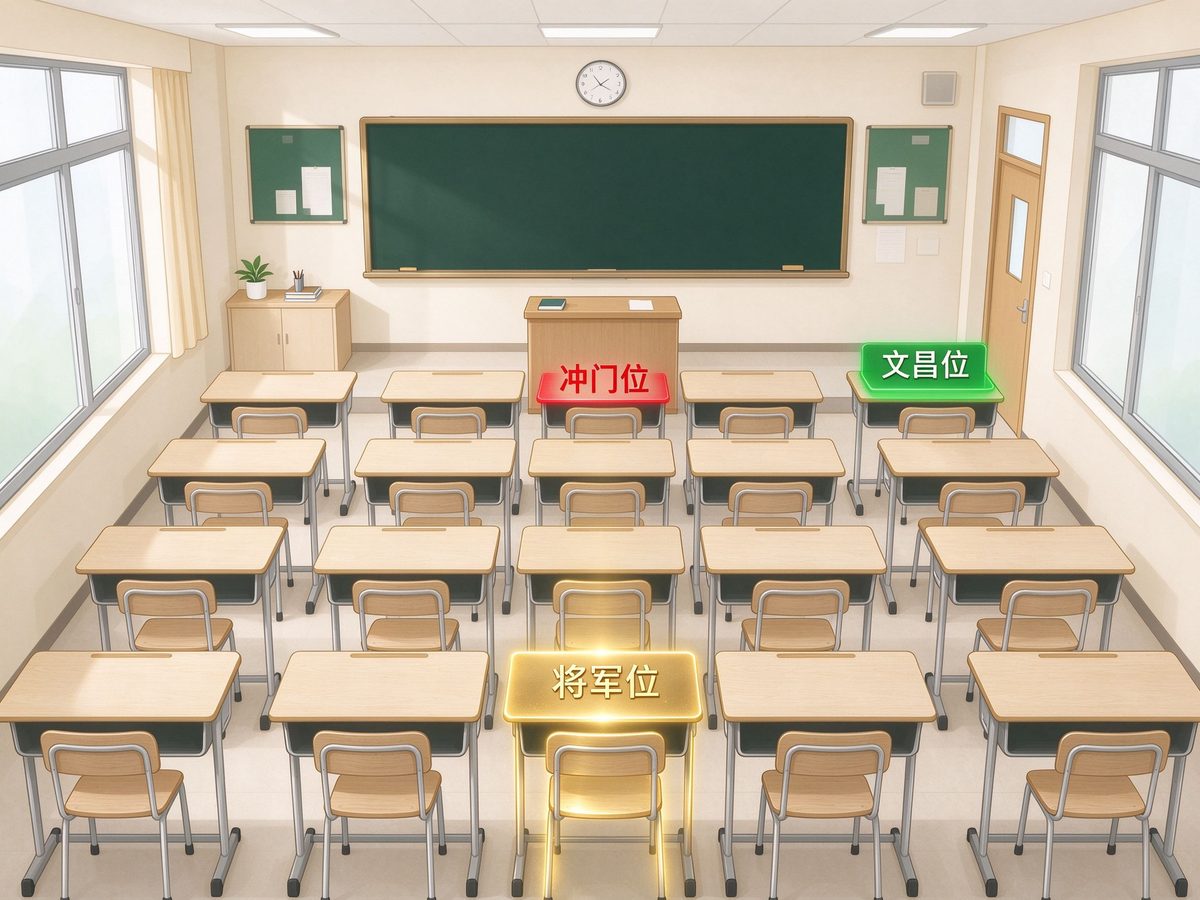
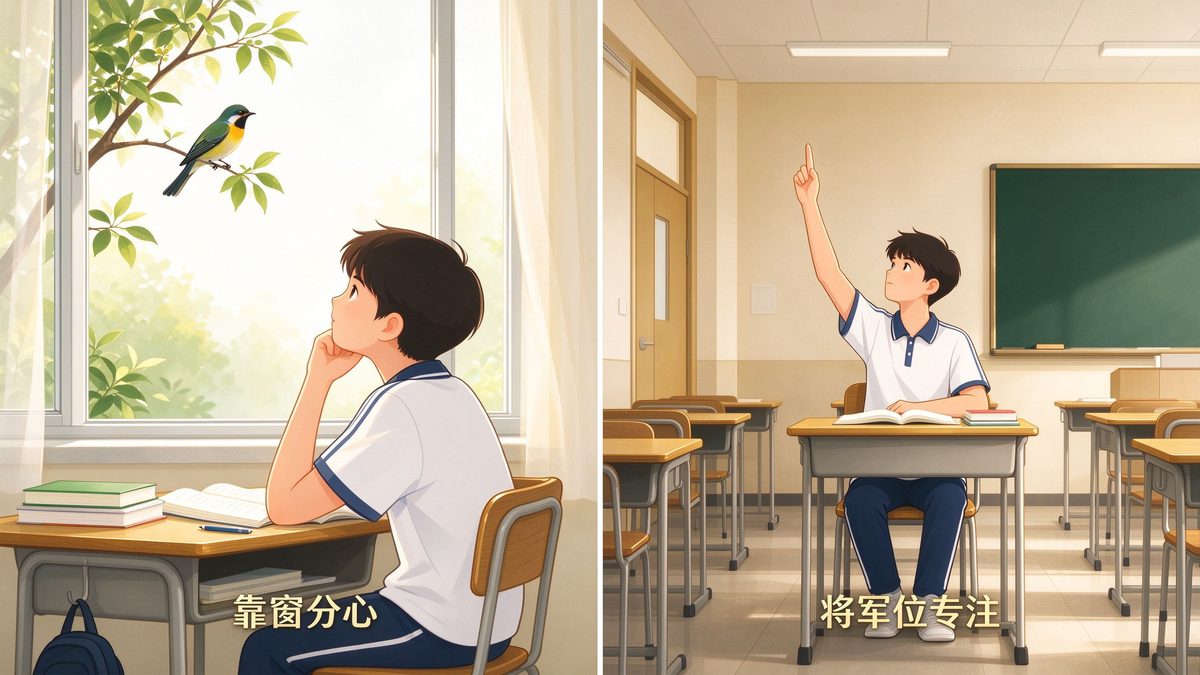
Lisa, a high-school teacher in Toronto, noticed her student Maya consistently scored highest on mock exams. Asked where she always sat, Maya pointed to the front-left corner — “it’s just my spot”. Lisa checked a feng shui map and realised Maya’s spot was the exact command position of the classroom. She began rotating students through different “power seats” each week. To her, the difference was plain: students in the command position settled faster, and those facing the door said they felt more anxious during tests.
Want to know where your (or your child’s) “Wen Chang” position is? Enter a birth date and use the Ba Zi chart to see study luck and the best learning direction.
This section is educational material on traditional Chinese thought. It is not medical, financial or investment advice, and it promises no outcome of any kind.