Your Desk Is Costing You Focus — Fix It in 5 Minutes
Four checks. Five minutes. A noticeably better workday.
Four checks. Five minutes. A noticeably better workday.
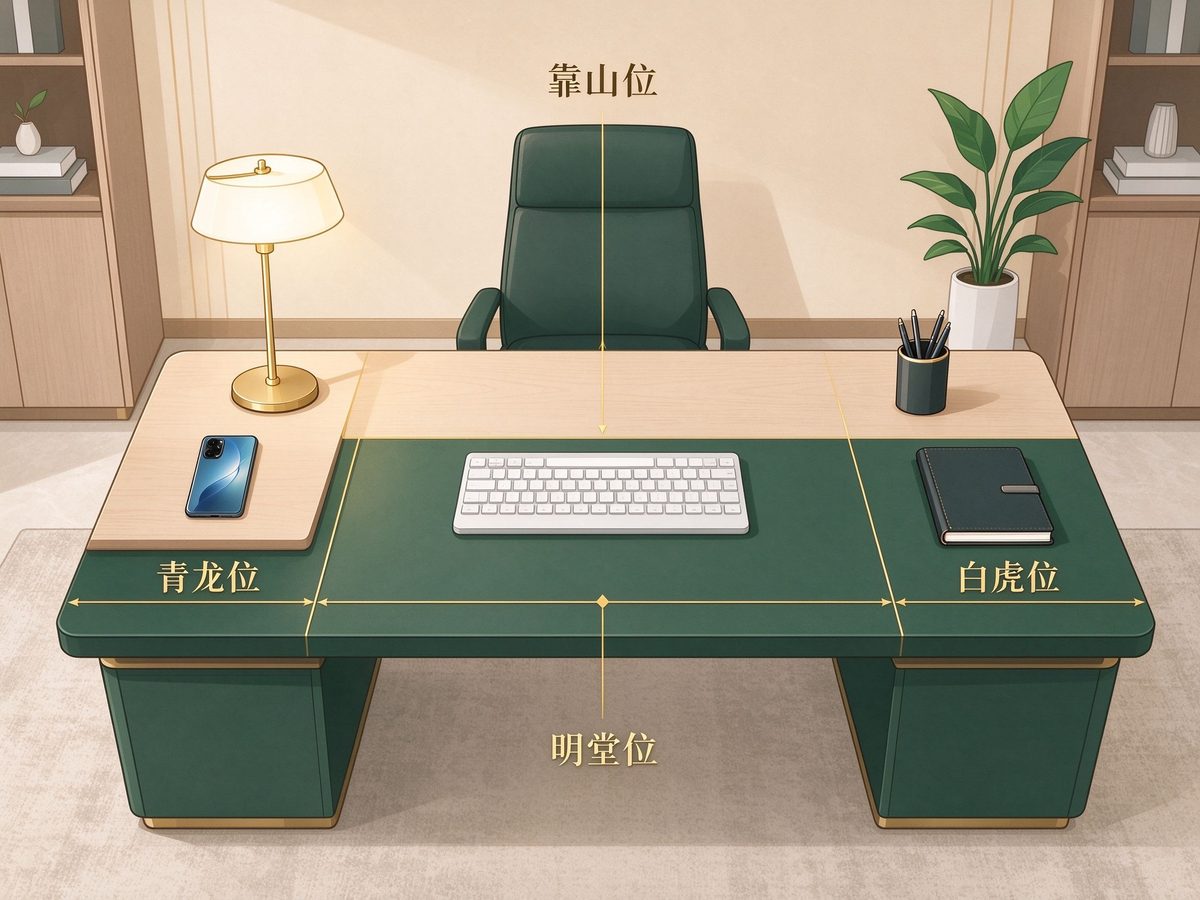
In the tradition, your chair should have a solid wall behind it — “mountain support”. With your back to a door, corridor or window, part of your mind stays alert to what is behind you, draining energy all day. If you cannot move the desk, put a tall plant or a stack of books behind the chair; a high-back chair also helps.
Keep the left side of the desk slightly higher and busier — phone, lamp, monitor. Keep the right side low and quiet — pens, a notebook, small items only. That asymmetry reads as being in control rather than reacting all day.
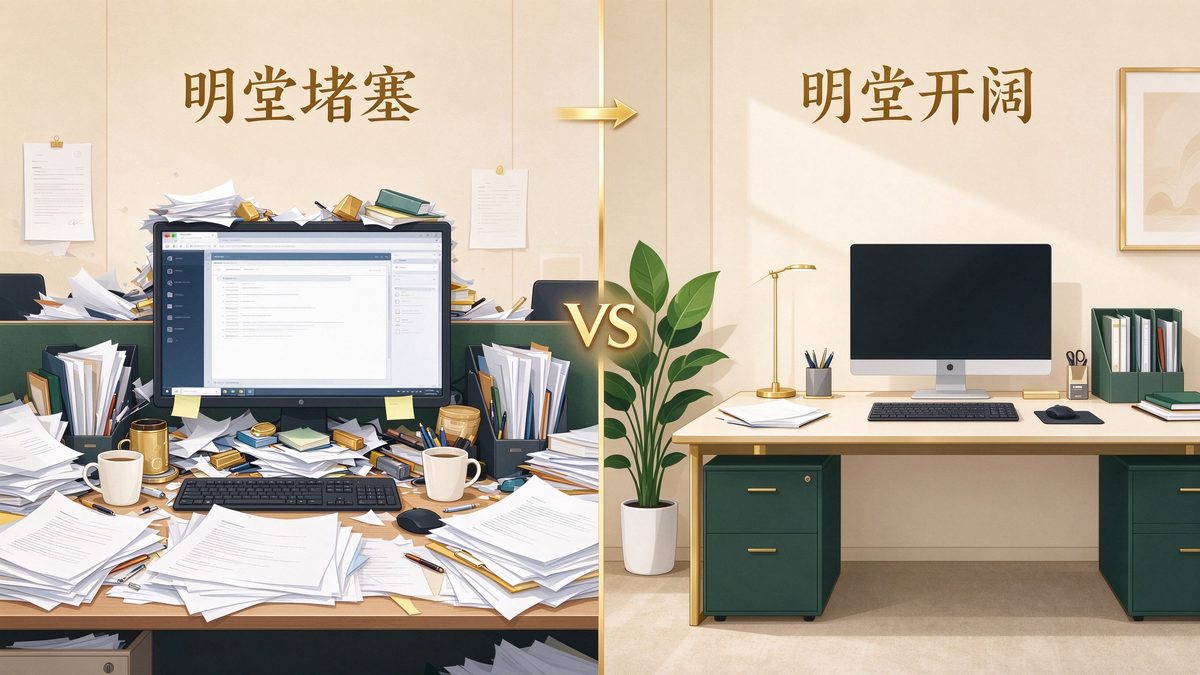
The space directly in front of you is the “bright hall” — a symbol of your forward view. It should be open and uncluttered. A cluttered desk, the tradition holds, is a cluttered mind, and opportunities get missed in the mess.
Put a solid wall behind the chair and leave the space in front of the desk open. If the desk can only face a door or a corridor, put a screen, a low cabinet or a curtain in between. What you are blocking is not “energy” but movement in the corner of your eye — the easiest thing to lose an afternoon to.
Mark, a software engineer in San Francisco, was battling burnout. Every afternoon around three his energy collapsed and careless mistakes crept in. His desk faced straight into the department’s main walkway, people passing all day. He turned the desk so his back was to a solid wall and his sightline no longer ran into the corridor. Two weeks later, colleagues began noticing he was more focused and more creative.
Want to know where the desk should go? Four photos of the room are enough — the report gives a specific position for it.
This section is educational material on traditional Chinese thought. It is not medical, financial or investment advice, and it promises no outcome of any kind.